When Football Meets the Racetrack: Using Odds Variations to Strengthen Accumulator Selections

Accumulator bets that mix football matches with horse races have gained traction as bettors look for ways to leverage price differences across multiple bookmakers, and the approach centers on identifying where odds on one sport diverge from another in ways that improve overall value. Observers note that football fixtures often run alongside race meetings on weekends and midweek evenings, creating opportunities for combined selections where a single bookmaker's pricing on one event might lag behind competitors while another offers tighter margins on the racing side. Those who've examined these patterns point out that the key lies in shopping odds rather than relying on a single platform, since variations in how different operators assess probabilities can widen the margin for error in multi-leg bets.
Understanding Odds Discrepancies Across Markets
Bookmakers adjust their football odds based on team form, injuries, and market movement while horse racing prices fluctuate with late withdrawals, track conditions, and betting volume, yet these adjustments rarely align perfectly between the two sports. Researchers who have tracked pricing data across operators find that a Premier League match priced at 2.10 with one firm might sit at 2.30 elsewhere, and the same pattern appears in racing where a favorite in a handicap can differ by several points depending on the bookmaker's risk model. This separation allows accumulators to incorporate legs from both disciplines without forcing every selection through the same margin structure, and data from industry reports shows that combining markets this way often produces higher combined odds than sticking to one sport alone.
Take one operator who prices a Premier League draw at 3.40 while competitors sit closer to 3.10, then pair that with a horse racing selection where another firm offers 4.50 on an each-way bet that others list at 4.00; the combined return shifts noticeably when those two prices are locked in before the events begin. Experts have observed that July 2026 brought additional race meetings coinciding with pre-season football friendlies, which increased the number of simultaneous markets available for such cross-sport construction. Those monitoring the period recorded more frequent price gaps during these overlapping schedules, particularly when bookmakers balanced exposure across high-profile football and lower-volume racing events.
Building Accumulators That Exploit Price Gaps
Successful construction starts with selecting football outcomes that carry moderate probability yet show measurable price differences, then matching them with racing selections where similar discrepancies exist on the same or competing platforms. Analysts who reviewed accumulator performance data indicate that legs drawn from different sports reduce the impact of correlated risk, since a late goal in football does not directly influence a horse's performance on the track. The method requires comparing at least three bookmakers for each leg, noting which site leads the market on football and which leads on racing, then assembling the bet across accounts to capture the strongest available prices.
One documented case involved a Saturday accumulator that combined three Premier League results with two race results from the same afternoon card, where the football prices came from one operator and the racing prices from another; the final combined odds exceeded what any single bookmaker offered for an equivalent five-leg bet confined to one sport. Studies of betting patterns reveal that such splits become more effective when the football matches involve teams with inconsistent home records and the races feature competitive fields with multiple contenders, since these conditions tend to produce wider price spreads. The process demands quick comparison tools or browser extensions that display odds from multiple sources simultaneously, allowing the bettor to confirm the best available figures before placing the legs in sequence.
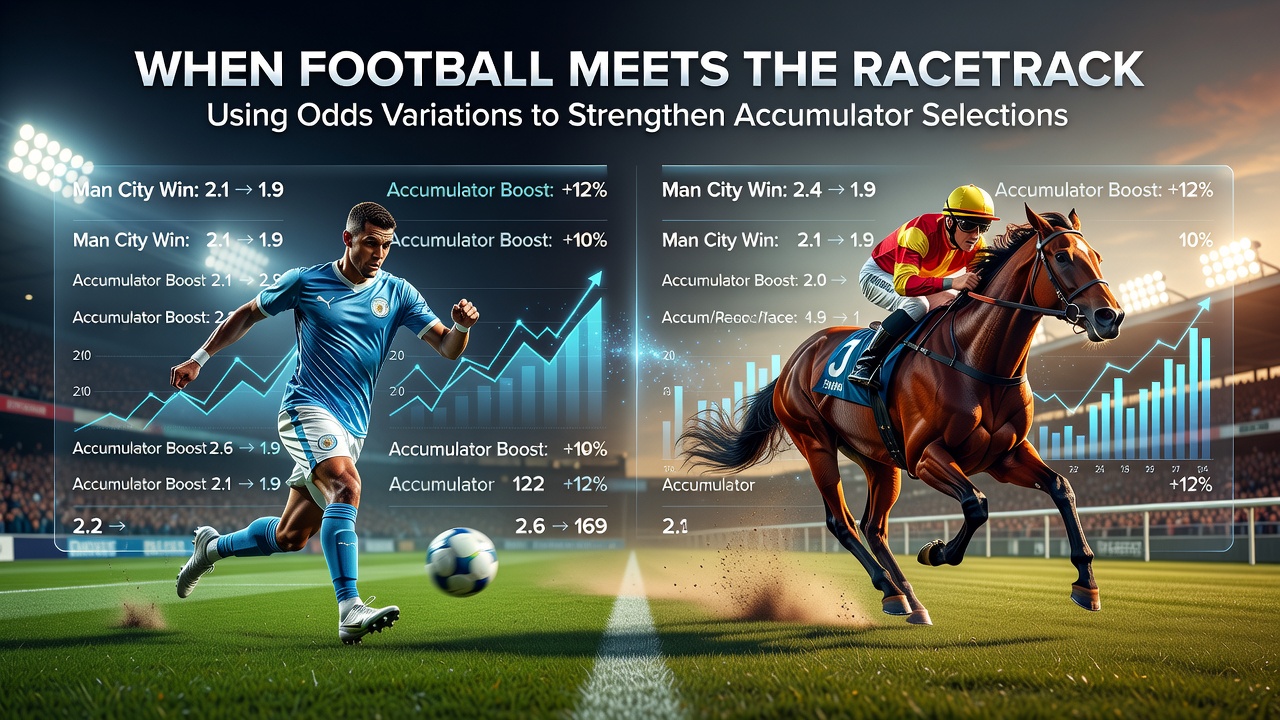
Practical Steps for Cross-Sport Selection
Bettors begin by identifying the main football fixtures for a given day and noting which outcomes display the largest spreads across operators, then repeat the scan for the day's race meetings to find comparable gaps. According to figures released by the American Gaming Association, combined football and racing betting volumes rose during periods when multiple sports overlapped, supporting the view that operators adjust pricing independently. Those constructing accumulators then allocate each leg to the site offering the highest return, ensuring the overall stake remains within responsible limits while maximizing the potential payout through the accumulated price differences.
Additional considerations include checking for each-way options in racing that can hedge against non-winning favorites and pairing them with football over/under markets that show similar price variation, since these secondary lines often move differently from outright results. Research from the European Gaming and Betting Association highlights that operators in multiple jurisdictions maintain separate risk teams for football and racing, which contributes to the persistent pricing inconsistencies that accumulators can target. The approach works best when events start at staggered times, allowing confirmation of earlier legs before committing to later ones, although many platforms now permit all selections to be placed in advance.
Conclusion
Accumulator strategies that draw from both football and horse racing rely on systematic comparison of odds across operators to capture measurable price differences that single-sport bets rarely provide. Data indicates these methods gain relevance during periods of schedule overlap such as July 2026, when simultaneous fixtures increase the pool of available markets. Observers continue to document how independent pricing models between the two sports create recurring opportunities for those who monitor multiple bookmakers and assemble selections accordingly.