Track Conditions and Court Surfaces: Integrating Equine and Tennis Data for Accumulator Builds

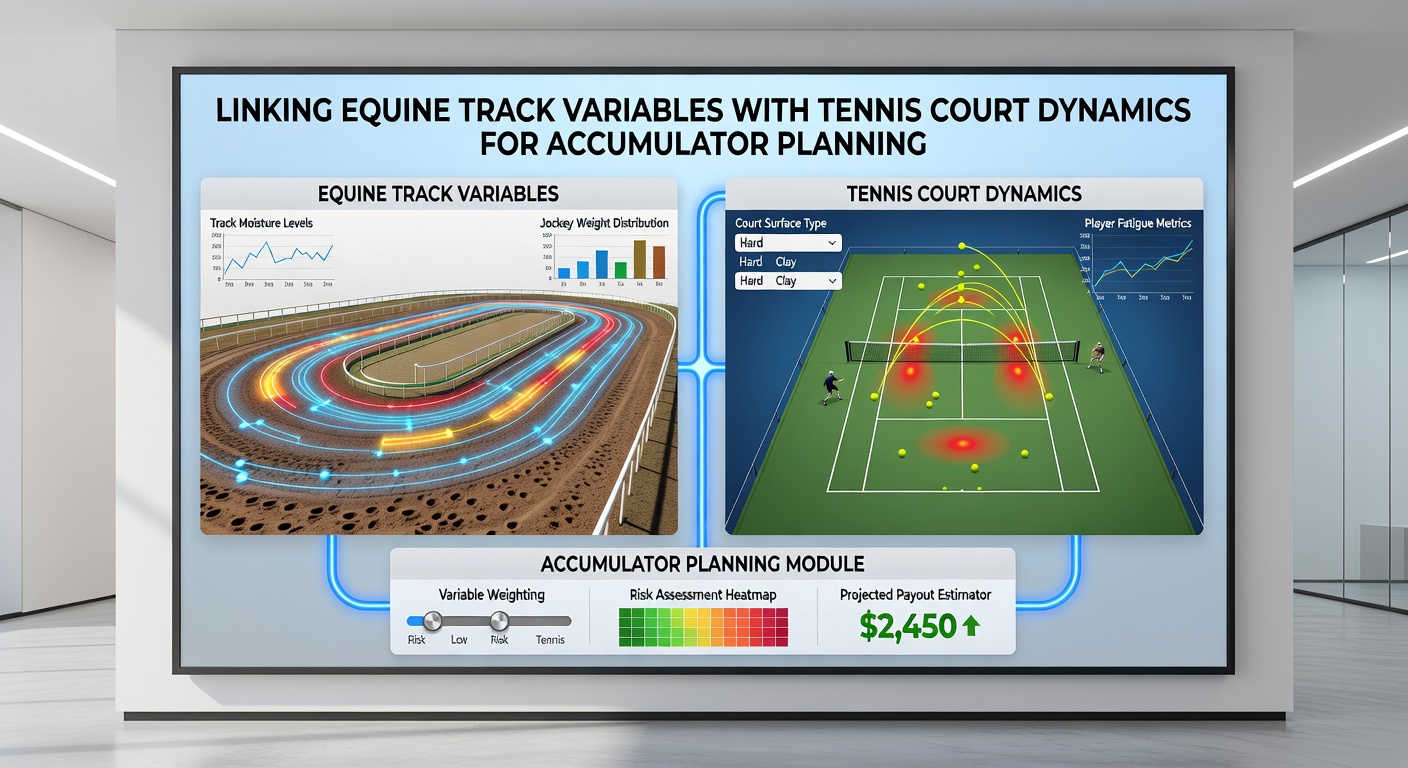
Equine track variables such as ground firmness, moisture levels, and temperature gradients connect directly to tennis court dynamics including surface composition, ball bounce rates, and player fatigue patterns, and analysts use these connections when constructing accumulators that span both sports. Data from multiple racing jurisdictions shows that horses running on soft ground produce slower times and altered win probabilities while clay courts in tennis slow ball speeds and extend rally lengths, creating parallel effects on event outcomes that bettors factor into multi-leg wagers.
Core Variables in Thoroughbred Racing Tracks
Track officials record going descriptions daily, ranging from firm to heavy, and these reports influence starting prices across bookmakers. Temperature swings above 25 degrees Celsius combined with low humidity dry surfaces faster, whereas overnight rainfall raises moisture content and shifts expected results toward stamina-oriented runners. Observers note that trainers adjust declarations based on these updates, and historical performance tables compiled by racing authorities demonstrate measurable changes in strike rates when conditions deviate from a horse's proven preferences.
Tennis Court Dynamics and Environmental Factors
Tennis surfaces divide into grass, clay, and hard courts, each producing distinct movement profiles that alter match durations and set scores. Grass courts favor serve-dominated play with lower bounce, while clay increases friction and extends points by up to 30 percent according to match statistics released by the International Tennis Federation. Air temperature and humidity further modify ball pressure and player recovery intervals, and researchers at sports science centers have documented how these elements correlate with upset frequencies during afternoon sessions under direct sunlight.
Linking the Two Sports Through Shared Environmental Signals
Weather systems affecting racing meetings in the morning often persist into afternoon tennis schedules on the same continent, allowing analysts to map moisture retention on turf tracks against expected court speeds later the same day. A front that softens gallops at one venue may coincide with slower conditions on outdoor hard courts elsewhere, and data aggregators combine these readings to adjust implied probabilities within accumulator legs. One study released by an Australian university equine research group tracked three years of simultaneous events and identified overlapping performance shifts when humidity exceeded 70 percent across both disciplines.
Accumulator planners therefore monitor official going reports alongside court surface updates published by tournament organizers, and they cross-reference these with live wind speed readings that affect both thoroughbred stride patterns and tennis ball trajectories. When multiple variables align, the combined probability adjustments can exceed the sum of individual sport calculations, which is why syndicates maintain dedicated monitoring teams during peak calendar periods.
Practical Application in Multi-Sport Wagers
Betting operators publish dedicated markets that allow combination of racing and tennis selections within single slips, and software tools now ingest real-time track and court feeds to recalculate odds as conditions evolve. Those who review pre-race veterinary reports alongside player fitness bulletins gain additional edges because injury risk rises on both heavy tracks and high-heat clay sessions. Figures released by Canadian gaming research bodies indicate that bettors who incorporate environmental cross-checks achieve higher long-term yield percentages than those relying on isolated sport statistics alone.
Calendar planning becomes relevant when major racing festivals overlap with grand slam events, and operators release promotional structures that reward multi-sport selections during these windows. In May 2026 several North American tracks will host turf meetings on the same weekends as European clay-court tournaments, giving planners extended datasets for model refinement before those dates arrive.
Data Sources and Analytical Tools
Industry organizations such as the International Federation of Horseracing Authorities supply standardized going reports that feed into public databases, while academic papers from sports performance laboratories provide peer-reviewed correlations between surface metrics and outcome distributions. Analysts integrate these feeds through API connections that update accumulator builders automatically, reducing manual calculation errors during live sessions. International Tennis Federation data resources offer match-level statistics that complement equine performance archives maintained by regional racing boards.
Geographic variation adds another layer because European turf tracks respond differently to rainfall compared with Australian synthetic surfaces, and tennis venues in arid regions exhibit faster court speeds than those near coastal humidity zones. Models that weight these regional differences produce tighter probability bands for cross-sport legs and help operators set limits that reflect actual rather than assumed correlations.
Conclusion
Integration of equine track variables with tennis court dynamics supplies accumulator planners with measurable inputs that reflect real environmental influences on both sports. Continued collection of synchronized datasets from racing authorities and tennis federations supports ongoing refinement of these cross-sport models, and operators continue to expand market offerings that accommodate such combined selections.