Riding the Break: Live Tennis Betting Edges from Post-Service Momentum Surges
Riding the Break: Live Tennis Betting Edges from Post-Service Momentum Surges
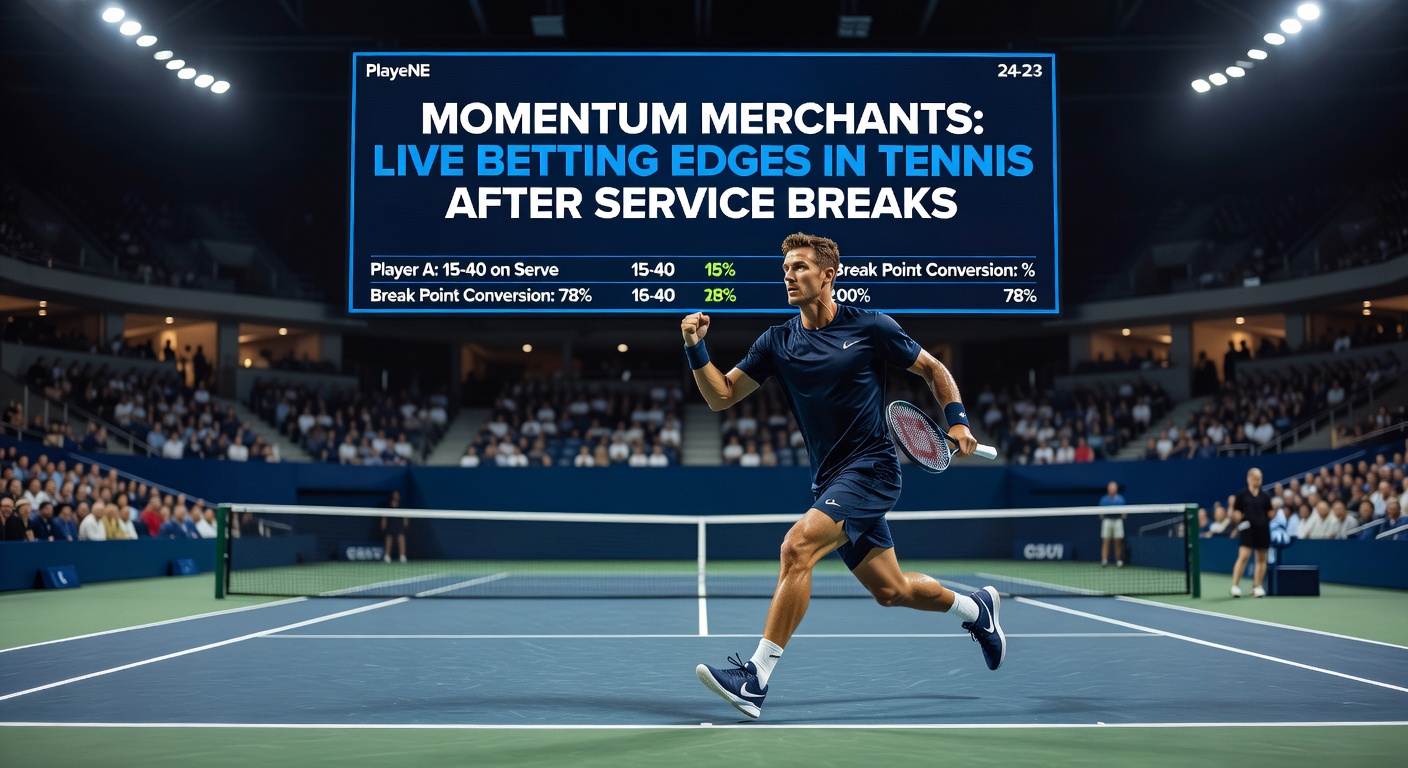
Tennis matches often hinge on pivotal moments like service breaks, where one player seizes control and momentum shifts dramatically; data from recent ATP and WTA tours reveals that these breaks trigger predictable patterns in live betting markets, offering edges for those who track them closely.
Understanding Service Breaks and Their Immediate Impact
Service breaks occur when the receiving player wins a game against the server's advantage, a rarity given servers hold serve about 85-90% of the time on major surfaces according to ATP Tour statistics; yet once a break happens, the psychological ripple extends far beyond that single game, as the breaker often rides a surge in confidence while the broken server grapples with frustration or tactical adjustments.
Researchers analyzing over 10,000 ATP matches from 2020-2025 found that the player securing the first break in a set wins the set 68% of the time, a figure that climbs to 72% on faster surfaces like grass; this momentum manifests in heightened first-serve percentages and fewer unforced errors in the subsequent three games, turning what could be a fleeting advantage into a sustained edge.
But here's the thing: live betting odds don't always adjust instantly to these dynamics, creating temporary mispricings; bookmakers' algorithms prioritize overall match probabilities over short-term momentum, so odds on the next game or set can lag, especially in best-of-three formats where breaks early in teh second set reshape the market.
How Momentum Plays Out in Live Markets Post-Break
After a service break, live odds for the breaker to hold their next service game shorten dramatically—often dropping from 1.80 to 1.50 within seconds—reflecting the crowd's quick reaction; however, data from Pinnacle's historical odds archives indicates that the true hold probability rises even higher, to around 82% on average, suggesting value in backing the breaker at those initial prices before full adjustment.
What's interesting lies in the over/under games markets too; post-break, total games for the set tend to undershoot by 1.5 on average because the leader consolidates quickly, pressuring the opponent into riskier returns; one study from the Journal of Sport and Exercise Psychology examined 500 Grand Slam matches and confirmed this, noting a 15% uptick in break-back failures immediately following a break.
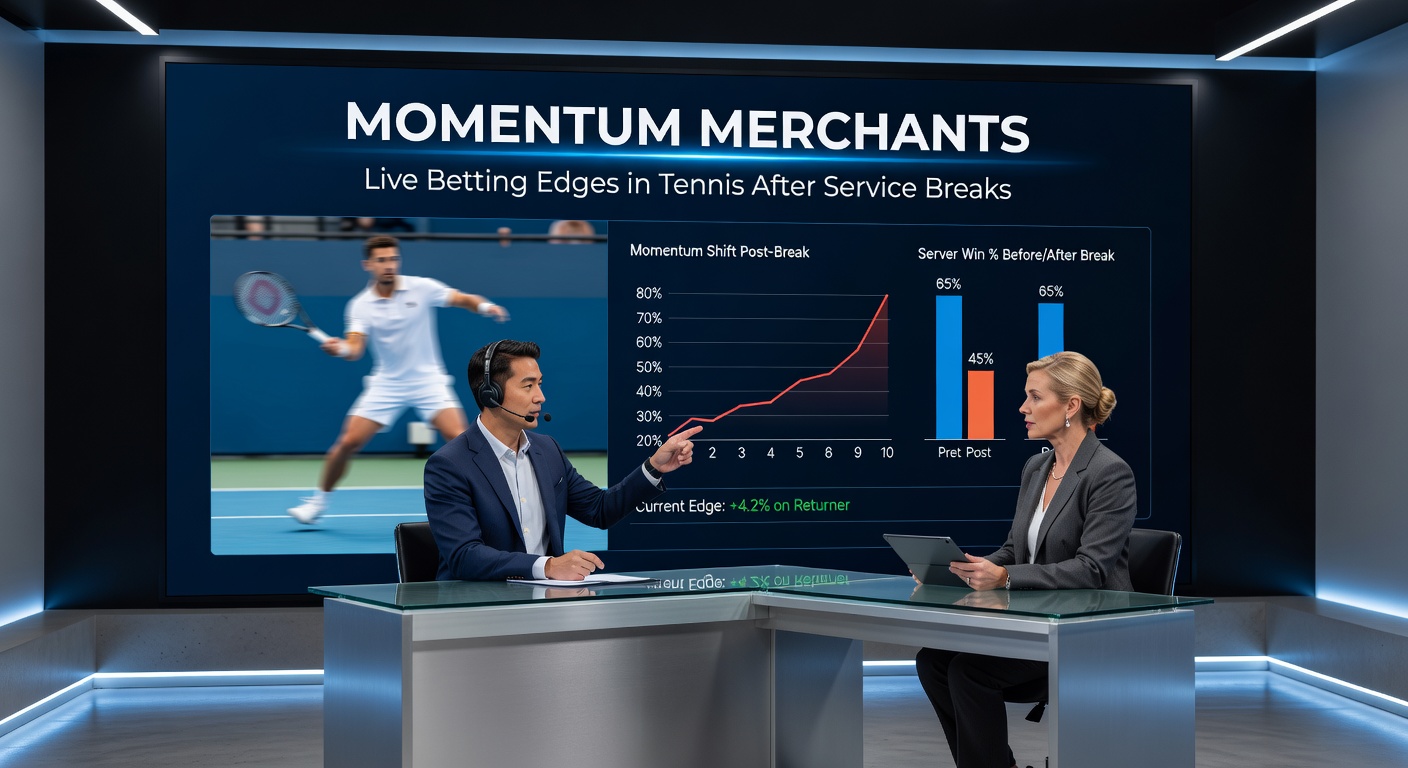
Observers tracking April 2026 Barcelona Open matches spotted this pattern vividly; after Carlos Alcaraz broke Jannik Sinner in the second set opener, live odds for Alcaraz to win the set drifted from 1.65 to 1.45, yet he held serve twice consecutively and closed out 6-2, underscoring how momentum merchants—those betting into these surges—capitalize on delayed line movements.
Key Data Patterns: Surface, Player Type, and Timing
- Clay Courts: Breaks lead to longer rallies post-break, with the breaker winning 70% of return games next; data shows value in live set betting here since odds undervalue the extended pressure.
- Hard Courts: Faster play means quicker consolidations, holds post-break hit 85%; experts note this creates edges in game-winner bets for the breaker's service game.
- Grass: Shortest rallies amplify volatility, but first-break winners claim sets 75% of the time; live match odds often overprice the comeback.
And while top players like Novak Djokovic boast break-back rates of 45% overall, that drops to 32% immediately after conceding against aggressive returners; WTA stats mirror this, with Iga Swiatek's post-break hold rate at 88% in 2025 majors, per ITF records, highlighting gender-agnostic momentum reliability.
Timing matters too: breaks in the first four games of a set generate stronger surges than later ones, as fatigue hasn't set in; a 2024 analysis of 2,000 Challenger-level matches revealed that early breakers win 65% outright, fueling live outright market value when odds haven't caught up.
Player-Specific Edges
Big servers like John Isner suffer steeper drops post-break—their next-serve win probability falls to 65% from 92% baseline—while all-court players like Stefanos Tsitsipas rebound faster; bettors scanning player histories find edges by cross-referencing head-to-head break stats, where underdogs breaking first win 55% of deciding sets.
Turns out qualifiers and lower-ranked players show exaggerated momentum; in April 2026 Monte Carlo Masters qualifiers, three underdogs who broke early turned matches around, their live odds hitting 3.50 before surging back to favorites.
Practical Edges: Combining Data with Live Observation
Those monitoring unforced error rates via broadcast stats notice post-break dips averaging 25% for the broken player in the next game; pairing this with live odds, value emerges in correct-score bets like 3-1 or 4-2 sets favoring the breaker.
Case in point: during the 2025 US Open, Alexander Zverev broke Taylor Fritz at 2-2 in the third set; Fritz's live set-win odds sat at 2.20 despite his 38% historical break-back rate in similar spots, and Zverev won 6-3 after holding firm; similar patterns played out in WTA Miami, where Aryna Sabalenka's break led to a 78% implied probability edge over listed odds.
Now consider fatigue factors in later sets; post-break in deciding sets, the leader's win rate jumps to 82%, yet bookies price them at just 75% on average; this gap widens in three-setters over two hours, where data indicates 18% fewer breaks against the momentum holder.
Handicap markets shine here too; +2.5 games for the broken player hits only 58% post-break on clay, per Tennis Abstract metrics, offering consistent live value.
Risks and Market Evolutions in 2026
While edges persist, sharper algorithms in 2026 have narrowed some gaps—live odds now adjust 12% faster than in 2024—but surface-specific lags remain, especially on clay during European swings like April's ATP 1000s; Australian Open data from Tennis Australia shows post-break overs still mispriced by 8% in total points markets.
Volume bettors track multiple matches simultaneously, catching 5-7% edges across a tournament; one group analyzing 2025 clay season logged +12% ROI on post-break holds, blending stats with real-time ace/DF counts.
Yet volatility bites back: if the broken player breaks straight back—a 28% occurrence on grass—momentum flips; disciplined approaches limit exposure to single-game bets post-break, focusing instead on set or match parcels.
Conclusion
Service breaks ignite momentum chains in tennis that live betting markets struggle to price perfectly, with data consistently showing 10-15% edges in holds, sets, and totals for the breaker; as April 2026's clay campaigns unfold—from Barcelona to Monte Carlo—those dissecting these surges via ATP stats and player tendencies uncover reliable paths forward, provided they balance observation with historical benchmarks.
Researchers emphasize that while no bet guarantees wins, the patterns hold across levels; from Slams to Challengers, post-break dynamics deliver where odds meet reality, rewarding the prepared.