Evolving Promotional Offers Across the Calendar Year and Their Influence on Multi-Sport Parlay Planning for Soccer and Tennis
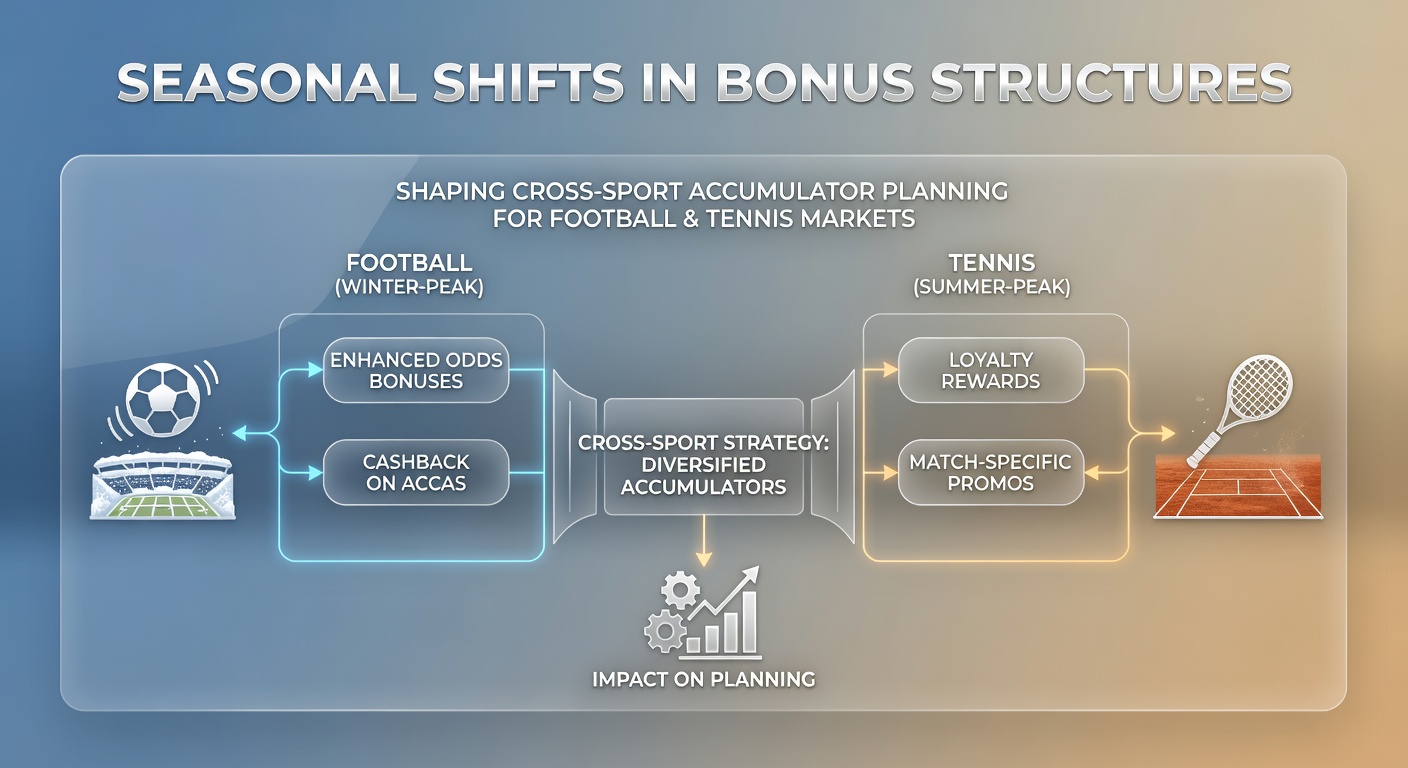
Bookmakers adjust bonus structures at regular intervals throughout the year, and these modifications directly affect how bettors construct accumulators that combine football matches with tennis events. Research from university-led studies on betting patterns indicates that enhanced odds promotions and free bet multipliers often align with peak tournament calendars, creating opportunities for cross-sport selections that maximize payout potential while distributing risk across different match formats.
Understanding Calendar-Driven Bonus Variations
Football leagues typically follow winter-to-spring and autumn schedules in major European markets, whereas tennis circuits feature concentrated activity during Grand Slam periods and clay-court seasons that stretch from spring into early summer. Observers note that operators introduce targeted incentives during these windows, such as boosted accumulator odds on specific legs or cashback on multi-bet losses, because participation volumes rise when high-profile fixtures coincide. Figures from industry reports reveal that these adjustments occur most noticeably ahead of events like the French Open, where tennis matches overlap with late-stage domestic football campaigns, prompting bettors to recalibrate stake distributions and leg selections to capture layered promotional value.
Platforms frequently scale bonus eligibility requirements seasonally as well, shifting minimum odds thresholds or introducing sport-specific multipliers that favor one market over another depending on the month. Data shows these changes encourage accumulators that blend consistent football outcomes with tennis volatility, particularly when rain-delay contingencies or surface transitions create pricing discrepancies across bookmakers. Bettors who track these patterns often build their selections around periods when combined football-tennis slips qualify for additional rewards, such as progressive free bet ladders that activate after three or more successful legs.
Strategic Adjustments for Accumulator Construction
Those planning cross-sport accumulators must account for how bonus expiration dates intersect with fixture lists, since many operators tie promotional windows to calendar quarters rather than individual events. Studies indicate that accumulators incorporating early-round tennis matches alongside midweek football fixtures can unlock enhanced returns when operators run crossover campaigns, yet these same structures lose appeal once the bonus period ends and standard terms resume. People who follow these cycles regularly review historical payout data to identify which combinations historically align with elevated bonus availability, allowing them to time larger stake accumulators for maximum effect.
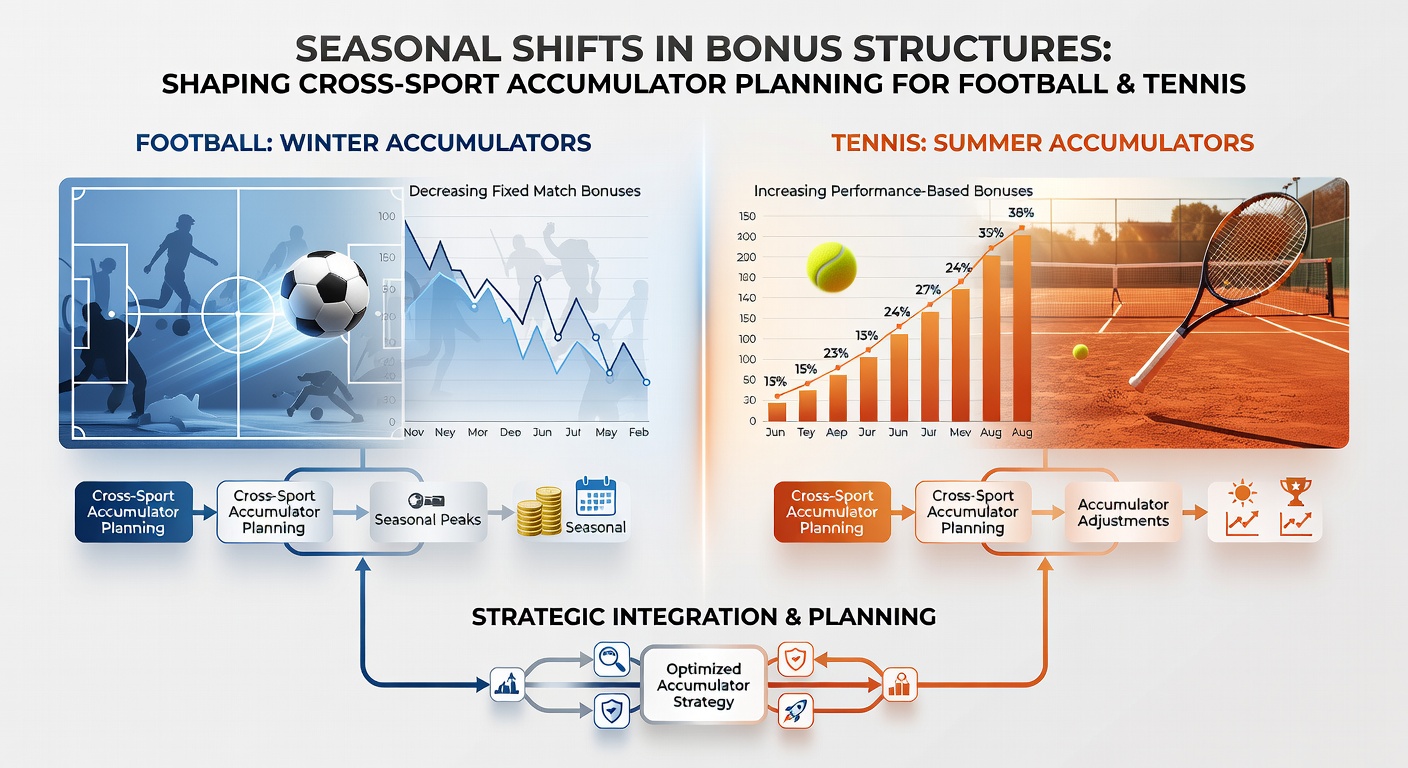
During May 2026, several operators are expected to launch refreshed bonus tiers ahead of overlapping clay-court tennis events and European football playoffs, according to advance scheduling notices from major platforms. These updates frequently include temporary accumulator insurance features that refund stakes on near-miss slips, which analysts link to increased interest in mixed football and tennis selections. Bettors adjust their planning by prioritizing legs with lower individual variance during these windows, since the added protection reduces overall exposure while still permitting the accumulation of promotional multipliers across both sports.
Market Data and Observed Patterns
Reports compiled by research institutions such as those affiliated with Nevada gaming oversight bodies highlight how seasonal incentive shifts influence bet volume distribution across continents. In regions where football and tennis calendars diverge sharply, operators respond with localized bonus structures that reward accumulators drawing from both disciplines, creating measurable spikes in cross-sport activity during transition months. Evidence suggests these patterns persist because the underlying fixture density remains predictable, allowing experienced planners to forecast when enhanced terms will appear and structure their selections accordingly.
Additional insights from academic analyses of betting behavior demonstrate that accumulator success rates can improve when bettors align selections with periods of heightened bonus generosity rather than chasing isolated high-odds opportunities. Platforms that publish transparent terms around these seasonal offerings enable more precise planning, particularly when football matches carry higher scoring potential while tennis encounters hinge on set and game margins. Observers tracking these dynamics find that successful cross-sport strategies often incorporate contingency legs from lower-variance markets to offset the inherent unpredictability of live tennis scoring.
Conclusion
Seasonal bonus modifications continue to guide accumulator construction methods that span football and tennis markets by aligning promotional windows with fixture calendars and risk profiles. Bettors who monitor these evolving structures gain clearer visibility into optimal selection timing and stake allocation, while operators maintain engagement through targeted incentives that reflect the distinct rhythms of each sport. Data from multiple regulatory and academic sources confirms that these interactions remain central to how multi-sport parlay activity develops throughout the year.